The Dedicated Sidechain Kick That Fixes Your Pump
 ReOrder
·Aug 12, 2026
·5 min read
ReOrder
·Aug 12, 2026
·5 min read
Your sidechain is routed to the main kick. It works fine in the drop. Then you get to the breakdown, the kick drops out, and suddenly your pads go completely static — all the movement is gone. Or your kick plays a syncopated pattern and the pumping follows it into places where it makes no musical sense at all.
The fix is stupidly simple and almost nobody does it: stop sidechaining to your actual kick.
So let’s have a look at that.
Build a sidechain kick that nobody hears
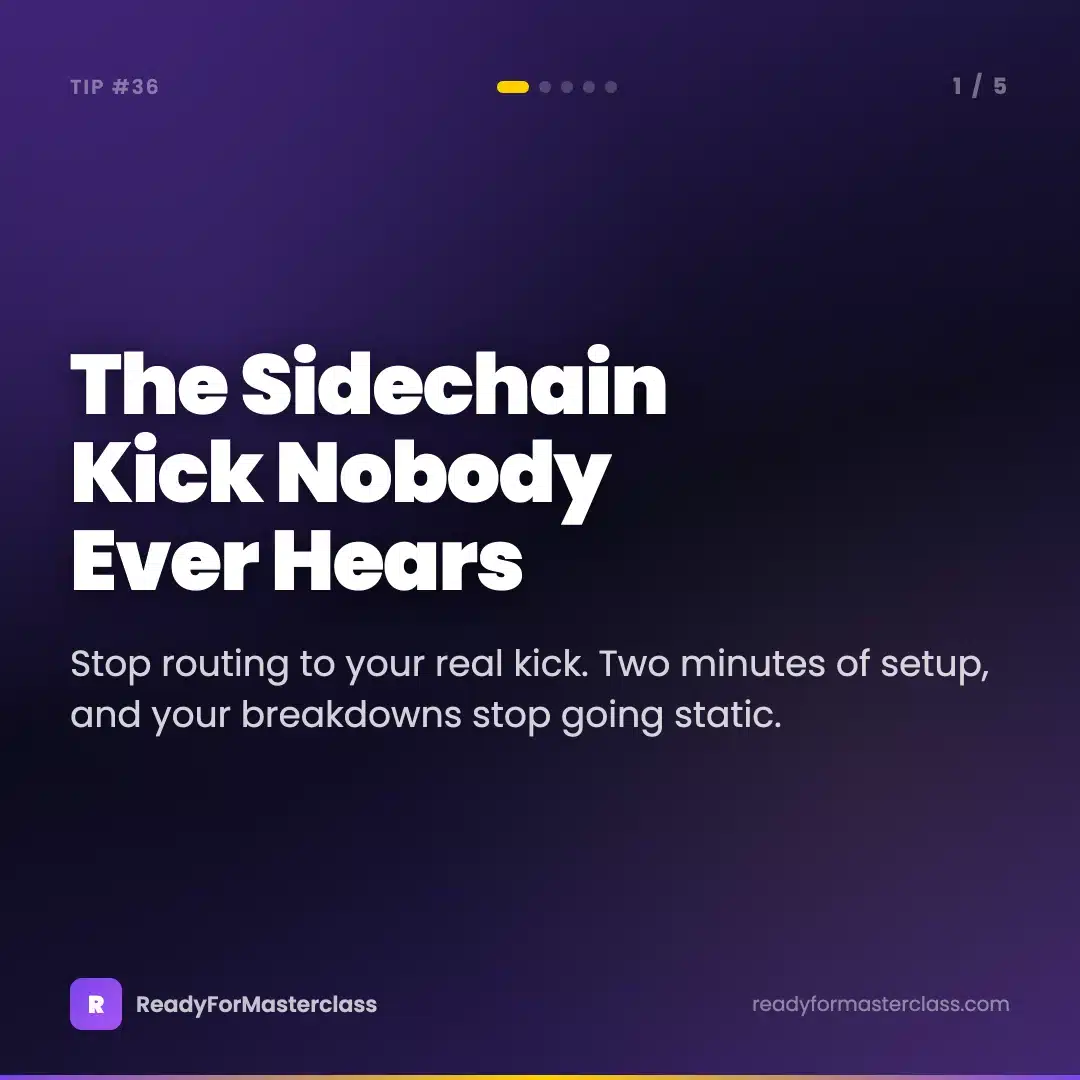
Here’s the setup. Create a new track, call it “Sidechain Kick”, and load a short kick sample into it. Can be the same kick you’re using, can be a different one — doesn’t matter, nobody is going to hear it.
Program a simple pattern on it. Usually straight quarter notes, 1, 2, 3, 4. Then route this track to the sidechain input of every compressor that needs ducking. Your main kick track never touches a sidechain input again.
Then mute it. That’s it — it stays muted for the entire life of the project. It’s a trigger, not a sound.
What you just bought yourself is control. Your pumping is now completely independent of your kick arrangement.
Where that pays off:
- Breakdown with no kick, but you still want the pads breathing. The sidechain kick keeps running, muted, and everything still moves.
- Main kick playing syncopated 16ths, but you want the pump locked to steady quarter notes. Two different patterns, no conflict.
- You want the ducking to follow a hi-hat feel instead of the kick. Program it that way.
Once you work like this you won’t go back. It takes two minutes to set up and it removes an entire category of problem.
The release time formula
This is the part that separates a mix that feels locked from one that feels sloppy, and it’s just arithmetic.
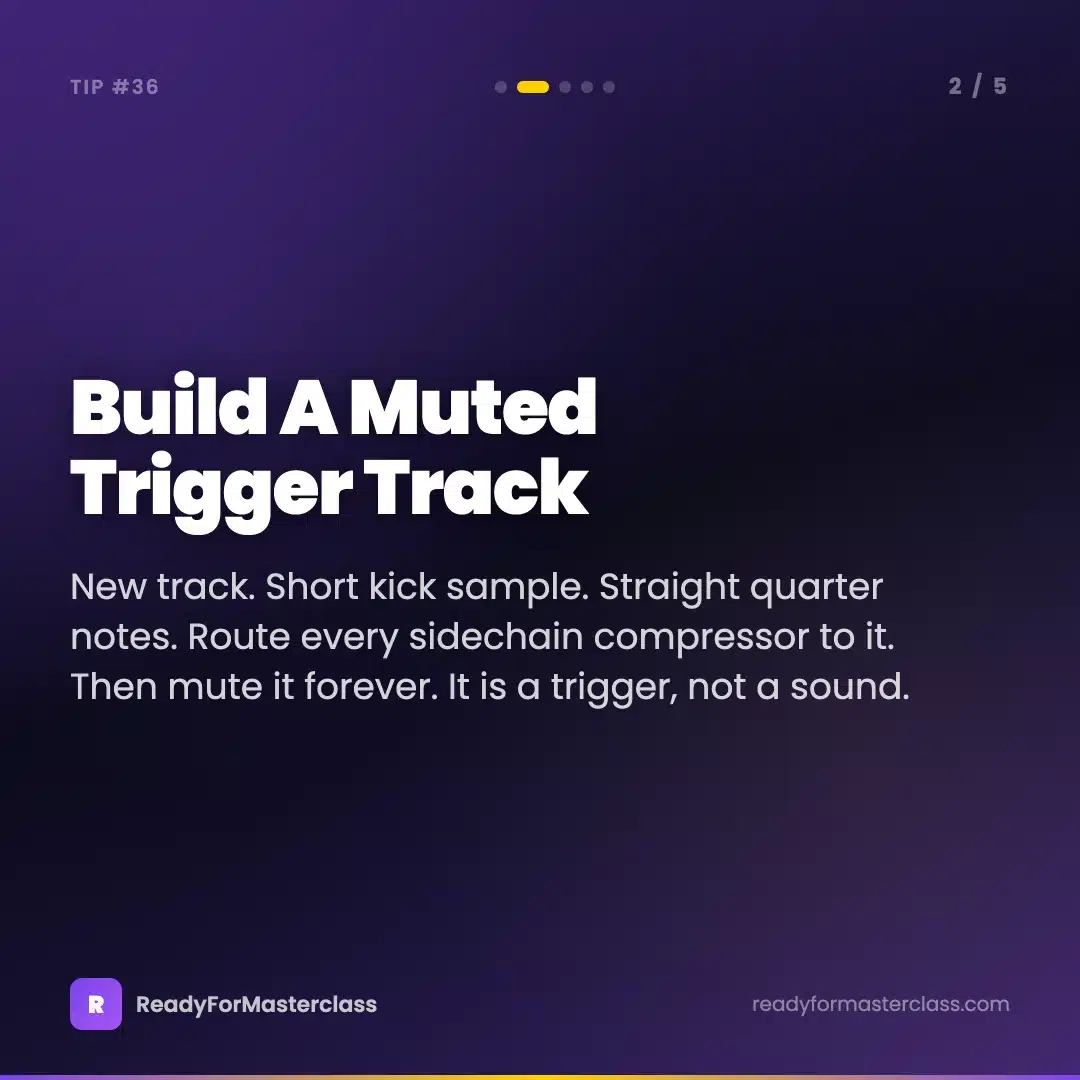
60000 ÷ BPM ÷ 4 = your 16th note in milliseconds.
That’s your release time. Set it there and the ducked element swells back up exactly as the next kick lands. Everything breathes in time with the track instead of near it.
Run the numbers for the tempos you actually work at:
- 134 BPM gives you about 112 ms
- 138 BPM gives you about 109 ms
- 140 BPM gives you about 107 ms
And before you think those are close enough to each other to ignore — they’re not. Five milliseconds is audible. Too fast and the element snaps back up with a twitchy, nervous feel. Too slow and it never fully recovers before the next hit, so everything smears together and your low end turns to mud.
Do yourself a favour and save these as presets. Name them by tempo range, something like “Sidechain 134-140”. Then your pump feels consistent across every track you make at that tempo, and you never do the maths twice.
How much ducking, per element
Not everything gets the same amount. This is where most mixes go wrong — one aggressive sidechain preset slapped across the whole project.
Mid-bass: 5 to 6 dB. This is the one that matters most. The mid-bass pumping against the kick is the trance feel. Be aggressive here.
Sub-bass: 1 to 2 dB. Barely anything. Just enough to lock it to the kick so the low end stays tight. Any more and you’re throwing away the weight you worked to get.
Pads: 6 dB or more. Pads can take a lot without sounding unnatural. Aggressive ducking makes them feel like they’re breathing.
Melodic synths and leads: 2 to 3 dB. Subtle. These need to stay musically present. Heavy sidechain on a lead just makes it sound like it’s being interrupted.
Reverb and delay returns: aggressive. Especially in the drop. When the clap hits you want the tail ducked out of the way so the next element lands clean. Long reverb channels pumping hard is a huge part of the big-room sound.
Open hats and cymbals: sidechain them too. Keeps them from smearing over the kick transient.
The general rule I use: if it lives anywhere in the 20 to 250 Hz range, where the kick lives, it gets sidechained. Above that it’s usually optional.
If you want to see this applied across a full track, with the routing and the group structure, that’s exactly what I walk through in How To Make Trance Like A Pro.

One trick worth stealing
High-pass the sidechain input.
Put a high-pass filter at around 800 Hz on the signal feeding the compressor’s sidechain. Now only the kick’s click and attack are triggering the ducking, not its low-end body.
The result is tighter and more deliberate. The compressor fires on the transient and lets go, instead of being held down by the kick’s sustain. It’s a small change and it makes the whole thing feel more controlled.
Try This Today
Make the dedicated sidechain kick track. Right now, in whatever project is open.
New track, short kick sample, quarter notes, route every sidechain compressor to it, mute it. Then calculate your release time — 60000 divided by your BPM divided by 4 — and dial that into every compressor in the chain.
Then play the breakdown. The pads will still be moving even though the kick is gone, and that alone is worth the two minutes.
Then save the whole thing as a preset so you never set it up from scratch again.
Go have fun with it.

Want to go deeper? Full sidechain routing, group structure and the rest of the production chain is in How To Make Trance Like A Pro.
Get the tools: How To Mixdown Uplifting Trance (€45.99) — the complete mixdown course, including how sidechain sits alongside EQ and compression in a real project.